



Listen to the article
The International Monetary Fund has told Uzbekistan that its pension reform, while well-documented on paper, has barely moved beyond the preparatory stage — and that accelerating it matters not just for retirees but for the health of the country’s entire financial sector.
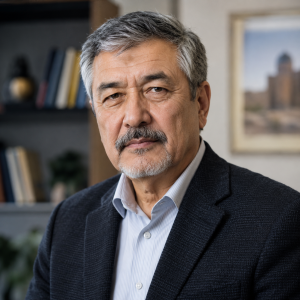
The assessment came at a presentation of the IMF’s regional economic outlook held at the Central Bank of Uzbekistan, where the Fund’s resident representative in the country, Koba Gvenetadze, described pension reform as one of the most significant structural tasks still ahead. Preparatory documents have been drawn up, he said, but the substantive transformation of the system has yet to begin.
Solvency and Adequacy in Tension
The IMF’s core concern is a familiar one for ageing economies: how to keep a pension system financially solvent while ensuring that payments remain meaningful for those who depend on them. Fund specialists have previously recommended that Uzbekistan carry out actuarial analysis — the kind of long-range modelling that tests whether a system can meet its obligations to future pensioners as the population ages and the ratio of working contributors to retirees shifts.
That demographic pressure gives the reform its urgency. Without a credible actuarial baseline, policymakers cannot reliably calibrate contribution rates, retirement ages or benefit levels to keep the system viable over the coming decades.
A Missing Engine for Long-Term Investment
Gvenetadze also framed pension reform as a financial-market question, not merely a social-policy one. Funded pension schemes — in which contributions are invested rather than immediately paid out — could become a significant source of long-term domestic capital, including through purchases of government and corporate bonds. That kind of institutional investor base is largely absent in Uzbekistan today.
Realising that potential, the IMF noted, requires two things that are still underdeveloped: a functioning capital market and clear, enforceable rules for managing accumulated pension savings. Without those foundations, any shift toward a funded model risks leaving savers exposed and the market gains unrealised.
Beyond pensions, IMF representatives identified labour markets, education, energy, digitalisation and artificial intelligence as further reform priorities, while stressing that macroeconomic stability must be preserved throughout. Separately, Uzbekistan has signalled its intention to seek recognition of overseas work experience accumulated by its citizens abroad when calculating their pension entitlements at home.