


Listen to the article
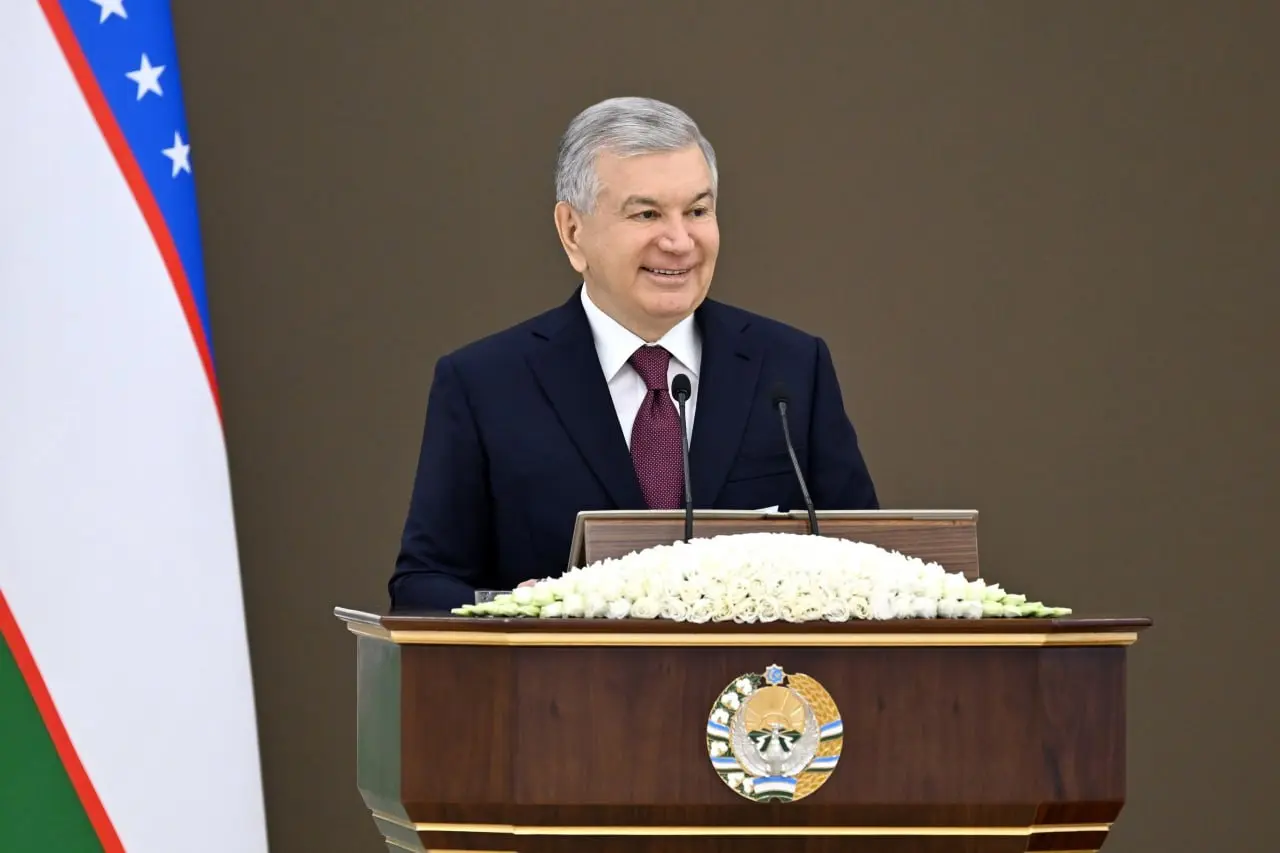
President Shavkat Mirziyoyev hosted a meeting with electrical-industry entrepreneurs and foreign investors on Monday, presenting a sweeping expansion plan that calls for 164 projects worth a combined $11.6 billion to be launched within three years and for sectoral exports to reach $5 billion.
The scale of the ambition was framed against a decade of rapid, if still incomplete, growth. Industry output this year reached 50 trillion soums, up from 1.7 trillion soums in 2016 — a roughly thirtyfold increase. Exports have risen fourteenfold and now stand at $1.6 billion, while investment in the current year alone reached $600 million, part of a cumulative $2 billion poured into the sector over the past decade. Some 413 new production facilities have been commissioned and more than 100 product lines launched, including household appliances, solar panels, electronic meters and high-voltage transformers. Mirziyoyev said those results still fell short of the sector’s potential.
Copper, energy storage and gaps in the supply chain
A third copper-enrichment plant was commissioned this year, the president noted, putting the country on course to produce 300,000 tonnes of copper annually, rising to 500,000 tonnes by 2030. Copper is the sector’s primary raw material. Separately, Uzbekistan plans to bring energy-storage capacity to 4.5 gigawatts by 2030 as part of a broader renewables build-out; foreign partners have indicated willingness to use locally made components in those projects, but some required equipment is not yet manufactured domestically.
Mirziyoyev identified several specific gaps the meeting was intended to address. The domestic market spends $200 million a year on video-surveillance equipment, a figure that rises above $600 million when neighbouring countries are included. Two existing producers — Digital Security in Bukhara and Samvision in Samarkand — each make only 2,000 cameras a year using proprietary software. Banks imported 9,000 ATMs last year at a cost exceeding $50 million. The president ordered officials to assess ATM demand, attract technology partners and investors, and study the feasibility of local production.
Regional project assignments
The meeting assigned specific product categories to specific regions. Thin copper foil for energy batteries and electronics is earmarked for Tashkent Region; inverters and electric-vehicle chargers for Jizzakh Region; energy-efficient electric motors for water pumps in Namangan Region; uninterruptible power supplies and server-cooling systems in Karakalpakstan. Andijan is to produce office equipment and pre-assembled cable sets; Tashkent city will host server, interactive-panel and sensor-manufacturing projects; Kashkadarya Region is assigned electronic circuit boards for televisions.
The 164 projects are divided across six tracks: 41 cable-industry projects worth $2.5 billion; 29 transformer and pump projects worth $1.4 billion; 45 industrial-robotics and machine-tool projects worth $3 billion; nine transport-electrification and electric-vehicle projects worth $650 million; 21 electronic-components and microelectronics projects worth $3.5 billion; and 19 household-appliance projects worth $600 million. Each track will have a designated senior official and a lead customer responsible for attracting investors and coordinating with research institutions.
A technology hub in Nurафшан and a robotics deadline
A new Centre for Future Technologies will be established in Nurафшан. Resident enterprises will receive the same tax and regulatory privileges as tenants of IT Park. Raw materials and components needed for robot, electronics and equipment manufacturing will be exempt from import duties, and income from research and development in those fields will not be taxed.
A national platform called Yangi Sanoat — New Industry — will be created to connect researchers working on advanced technologies with manufacturing enterprises. By 1 May, each region must adapt at least one existing R&D centre or technology park to the new industrial priorities and establish product-testing facilities. Responsible ministries have two weeks to draft a robotics-development decision and until 1 March to produce a comprehensive support programme for machine-tool building and electronics manufacturing.
Mirziyoyev cited NURA Electric as a model, noting that the company employs roughly 100 design and process engineers who bring their own developments into production, alongside 50 students in dual-education placements who receive both wages and practical training. Twenty students and researchers from technical universities are currently studying at South Korean electronics firms; that number is to be raised to 100.
Finance, procurement and export guarantees
Five Uzbek companies — Artikul Aziya and Maxcopper from Tashkent, Techno Cable Group and Vades Group from Tashkent Region, and Andijon Kabel from Andijan — have already secured $80 million from the European Bank for Reconstruction and Development. The EBRD has indicated readiness to extend $2–3 billion to industrial enterprises and to cover part of the cost of assessing their operations. The state will cover the remainder, including fees for international consultants, through the Trade Development Company, which will compensate each qualifying enterprise up to $50,000.
State procurement of electrical products amounts to 10 trillion soums a year. From 1 January, three-year procurement plans will be published in advance on a single unified platform, replacing the previous system that required entrepreneurs to monitor four or five separate portals. The meeting also announced a shift away from awarding contracts solely on lowest price. A life-cycle-cost methodology will be introduced that accounts for energy consumption, repair and maintenance over a product’s full service life. A test purchase cited at the meeting found that an imported 40-kilowatt transformer was 400,000 soums cheaper to buy than a domestic equivalent but consumed 10 percent more electricity and incurred repair costs four times higher over its operational life.
Local-content requirements — currently set at 25 percent for general goods and 70 percent for cables in public-private energy partnerships — will be extended to investment projects exceeding $10 million that benefit from tax preferences or access to state resources at below-market prices.
On export financing, the president acknowledged that obtaining bank guarantees for large international tenders is a bottleneck: securing a $10 million guarantee currently requires equivalent collateral. NURA Electric won a $2 million tender in Cambodia, but the guarantee requirement constrains larger bids. Banks were instructed to design a simplified guarantee procedure based on financial-health assessments and to publish it within one month.
To stimulate domestic appliance sales, banks will offer consumer loans at 18 percent annually for refrigerators, washing machines, air conditioners and other household appliances made in Uzbekistan. Responsible agencies have two weeks to prepare calculations and propose terms for placing affordable resources in commercial banks for this purpose.