



Listen to the article
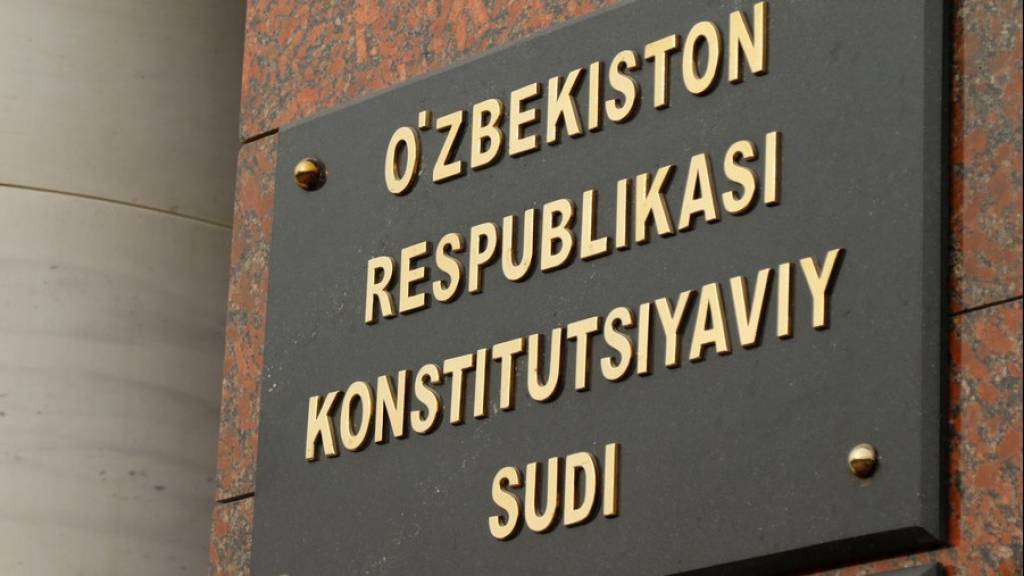
Uzbekistan has enacted a constitutional law restructuring the procedures of its Constitutional Court, introducing electronic case management, video-conference hearings, mandatory online publication of rulings and stricter timelines for state bodies to comply with court decisions, according to Abdulhakim Eshmurodov, chairman of the Senate’s Judicial-Legal Affairs and Anti-Corruption Committee.
The law entered force on the day of its official publication. Three provisions — Article 29 on the specifics of electronic proceedings, Article 58 part two, and Article 59 — will not take effect until 1 January 2028.
Electronic proceedings on equal legal footing
Article 28 of the law establishes that documents accepted within electronically conducted cases carry the same legal weight as their paper equivalents. Article 29 goes further, providing for the submission and receipt of case materials in electronic form, participation in open hearings via video conference, electronic confirmation of participants’ credentials, and the formation and signing of hearing minutes using a digital signature.
Citizens and legal entities will be able to file petitions through a dedicated information system, track the progress of their case online, participate via a mobile application and watch hearings broadcast live. The Constitutional Court may also initiate live broadcasts of sessions on its own authority, Eshmurodov said.
Procedural stages and access to legal aid
Incoming petitions will pass through several procedural stages: registration, preliminary examination for jurisdiction, verification of the petitioner’s standing and compliance with statutory requirements. Complaints must be accompanied by relevant court decisions, supporting documents and evidence that existing judicial remedies have been exhausted. Where a citizen requests it, the state is required to arrange the participation of a publicly funded lawyer.
Rulings are final and carry a three-month compliance deadline
Constitutional Court decisions are final and cannot be appealed. If a normative legal act or part of one is found unconstitutional, it ceases to have effect. The state body that adopted the act must bring it into conformity with the Constitution within three months, or within whatever shorter deadline the court sets. Decisions of state bodies issued on the basis of the struck-down act must be reviewed within one month; court decisions are to be reviewed under the procedure established by law.
Final rulings on the constitutionality of normative acts, international treaty obligations and official interpretations of constitutional and statutory norms are issued as decisions. Conclusions are issued on other matters; procedural questions are resolved by orders. All decisions and conclusions must be published in mass media, on the court’s official website and through other official channels within three days of adoption.
Annual constitutional-legality report
The law introduces a mechanism requiring the Constitutional Court to prepare an annual report on the state of constitutional legality, drawing on its generalised judicial practice. The report is to be examined at a court session in the first quarter of each year and then transmitted to both chambers of the Oliy Majlis and to the President. Results of how responsible state bodies have acted on the report’s recommendations may also be discussed at the Constitutional Court.
Institutional and budgetary provisions
A reserve pool of judicial candidates will be formed jointly with the Supreme Judicial Council. The court’s budget remains a separate line item in the state budget. Specific procedures are also set out for assessing the constitutionality of constitutional laws and ratification laws before presidential signature, and for issuing conclusions on matters put to referendum.
Eshmurodov said the law’s adoption would broaden access to constitutional justice for citizens and businesses, simplify procedures, reduce unnecessary bureaucratic burden and strengthen public trust in the judicial system.